
AION 2 Spiritmaster Guide — Orb Summoner (aka Elementalist)
AION 2 Spiritmaster guide: the orb-wielding summoner, also called Summoner or Elementalist, its skills, spirits, Stigma build and why no tier exists yet.
FAQ
Is AION 2 Spiritmaster the same class as Elementalist?
Is the AION 2 Spiritmaster the same class as the Summoner?
What is the Spiritmaster in AION 2?
What weapon does the AION 2 Spiritmaster use?
Is the Spiritmaster good for solo play in AION 2?
Can Elyos and Asmodians both play a Spiritmaster?
Is there a Spiritmaster tier placement yet?
What should a new Spiritmaster test in the first week?
What changes on this page after October 5, 2026?
How does the Spiritmaster combat cycle work?
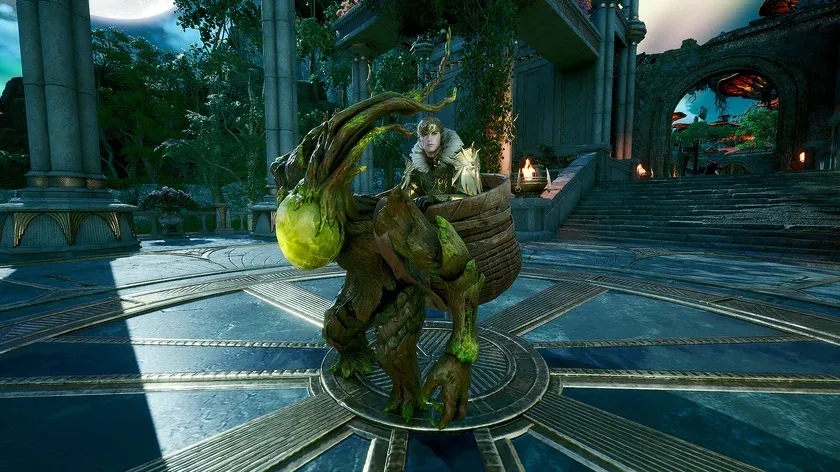
The Spiritmaster is the summoner of AION 2 and fights with an orb: a magic damage class that lets a summoned spirit do much of the fighting while it adds debuffs and control. It is confirmed for the global launch roster on October 5, 2026. Naming note up front: Spiritmaster is the global name, and Elementalist is what English coverage of the Korean and Taiwanese client calls the same class.
What is the AION 2 Spiritmaster?
The Spiritmaster is the AION 2 summoner and fights with an orb. NCSOFT describes it as a class that deals sustained magic damage through a summoned spirit, adds debuffs and control of its own, and plays with unusually high mobility for a caster. Solo play is part of its stated identity, not an afterthought.
| Spiritmaster | Detail |
|---|---|
| Role | Summoner / sustained magic DPS |
| Weapon | Orb |
| Primary stat direction | Magic attack — exact stat names and weights are not published for the global build |
| Difficulty | Medium: a second actor to manage alongside your own casts |
| Best for | Players who want sustained pressure, tactical play and a class that solos well |
The stat direction is a qualitative read, not a measured priority; the classes overview covers the rest of the roster.
How many spirits does the AION 2 Spiritmaster summon?
One class, several spirits, and they behave more like placed turrets than pets you send at a target. The turret framing is the one thing two sources describe the same way. The count is not: a single English-language guide names four, split across Fire, Water, Earth and Wind, and no NCSOFT material publishes a count at all.
Nothing we checked assigns a role to any individual element, which is the honest limit here: the names are documented, the specialisations are not. This is the state of the public material as checked on September 30, 2026.
| Source | What it says about the spirits | Read or only listed in results |
|---|---|---|
| NCSOFT global site, aion2.plaync.com | A summoned spirit that deals sustained magic damage, plus the summoner layering its own debuffs and control on top | Read — no count, no element names |
| mmoexp.com Spiritmaster class guide | Four elemental spirits — Fire, Water, Earth, Wind — and “akin to turrets rather than commandable pets” | Read |
| aion2hub.com class page | Describes the spirits as turret-like | Search result only, page not read |
| aion2.wiki.fextralife.com class list | Renders the same class as “Summoner who commands elemental spirits” | Search result only, page not read |
The turret framing is the part that changes how you play, and it is the one point more than a single source describes this way:
- Placement, not commands. A spirit you place and keep alive is a thing to position, like a device on a field, rather than an order you issue. That is also why the one guide that describes the spirit in this much detail tells you to summon the next before the current one dies.
- Its life is your clock. If the spirit dies early, the gap before the next one is dead time in which your own debuffs and control are carrying the fight alone. This is the same split-attention cost described in what the summon and its master each do, and it is what makes the class a poor fit for rooms where space gets expensive — see the dungeon list.
- Compare it to the other ranged option. The Ranger solves the same sustained-damage problem without a second actor to maintain; the Sorcerer solves the opposite one.
Is Spiritmaster the same class as Elementalist?
Yes — one class with two names. Spiritmaster is what the global service calls the orb-wielding summoner, and Elementalist is how English-language guides, wikis and videos built from the Korean and Taiwanese client usually render it. There is no second summoner class hiding behind the two labels.
The practical consequence is search, not lore: the two names return different pages describing the same kit, and material built from the KR/TW client may carry values that belong to that separate build, as the global vs KR/TW differences page sets out.
- Search both names before concluding a class is undocumented.
- When a page uses the other name, check whether the author says which service they played.
- This site uses Spiritmaster, the global name, throughout.
Is the AION 2 Spiritmaster the same as the Summoner?
Same class, a third label. “Summoner” is what English community guides call the orb-wielder, and it is the word people actually type into search, which is why it is worth searching alongside the other two. No NCSOFT global material we checked uses it as a class name, so treat it as a search alias rather than a third official name.
| Label | Where it comes from | When it is the right search term |
|---|---|---|
| Spiritmaster | The global service | Anything about the global launch, its build, or a ranking debate — this is the name NCSOFT uses |
| Elementalist | English coverage of the Korean and Taiwanese client | KR/TW patch notes and class overhauls, which list the same class under this name |
| Summoner | English community guides and the pages that surface for the summoner aion 2 search | Someone says “summoner” and you need to work out which class they mean |
The alias is not cosmetic. The pages that rank for the summoner aion 2 search use the word as their main label rather than as a passing synonym, and the class-list entry on the FextraLife wiki describes Elementalist outright as a “Summoner who commands elemental spirits”. So the term is doing real work in how this class is found and described, even though it is not printed on any official material we could reach.
- Search all three before deciding a class is undocumented. Half the class-specific material sits under one of the other two.
- Do not read a summoner guide as a global-build source. Whoever wrote it may have been playing the Korean or Taiwanese client; the global vs KR/TW differences page is the short version of why that matters.
- Watch for a different class wearing the same word. A summoner term in a guide listing every class may belong to a different service or a different game entirely. Match the weapon — this class is the orb — before you read the build advice.
How does the AION 2 Spiritmaster play?
As a class with two actors on the field. The summon carries much of the damage while you add debuffs, damage over time and control, which makes the rhythm slower and more deliberate than a burst caster and rewards planning over reaction. The official framing also puts mobility and solo play in the class identity.
How do Spiritmaster skills work?
The class runs on a few orb skills plus a summon you must keep alive. English-language guides describe the bar as four inputs: a left-click basic attack, a right-click area attack, a single-target fear, and a combo that sends spirits out and builds a charge. Button labels and every number attached to them are unverified for global.
The shape below is transcribed from the mmoexp Spiritmaster class guide, which is the only page of the four we read that goes to button level. It carries no citations of its own, so treat the column on the right as the operative one. The notes that follow come from that same single guide, and no second source we could reach repeats any of them.
| Input | What that guide describes it as | Status for the global build |
|---|---|---|
| Left click | Basic attack | Button label unverified |
| Right click | Area-of-effect fire damage, named “Burn with Flames” | Button label and skill name unverified |
| Q | Single-target fear, with a cooldown and a range figure attached | The figures are the guide’s own; not confirmed and not repeated here |
| Q2 | Combo attack: area damage plus summoning spirits with differing effects | Button label unverified |
| E | Curse combo that triggers attributes from the spirits you have collected | Button label unverified |
Three things about that list are worth holding onto even if every label is wrong:
- Fear is the control, and it is single-target. The same guide describes a separate pair of area fear skills as instant-cast crowd control. In a group, the classes you stand next to are the roster’s two supports — the Cleric, the primary healer, and the Chanter, hybrid support — which makes this the pairing worth reading next to, whatever the exact numbers turn out to be.
- The combo and the summon are the same button. Q2 both deals area damage and calls spirits out. That coupling is why a summoner who spends the bar on damage loses the summon timing, and it is the practical reason the class cannot be played as a pure damage build.
- A silence and a life steal are described alongside them. Both appear in the same guide as the fear skills, framed as tools for both PvE sustain and PvP pressure. We have not verified either on the global client; they are the two things to look for first in PvP, where positioning and recovery decide more than damage.
One discrepancy to flag rather than absorb: the same guide describes the weapon as two orbs, while NCSOFT global material and this page describe an orb. We could not confirm the dual-orb reading from any second source, so this page keeps the single-orb wording and leaves the question open. The skills and skill points guide covers how AION 2 splits Active, Passive and Stigma skills generally, which is the track the orbs and the spirits both sit on.
What does the Spiritmaster rotation look like?
Collect, then spend. Summon a spirit, keep it alive while it deals damage, work your debuffs and control on top, and repeat — with the summoning and fear skills running on their own cooldowns underneath. The one guide that goes this deep states the cost plainly: a spirit defeated too quickly cuts your overall damage output.
The charge is the part worth planning around, because it is the one mechanic that makes the class a loop rather than a rotation of independent buttons: collecting spirits in sequence fills an energy bar that pays out in a stronger attack. The trade is a dead window whenever the bar is not fed or the current spirit is already down.
In practice the loop is four things, listed as one English-language guide sets them out:
- Range and size before damage. Know what your skills reach and how wide they are, so you are not casting into a gap.
- Summon before you need it. Pre-emptively call the next spirit while the current one still has life, so the gap is a background detail rather than the fight.
- Watch the two cooldowns that matter. Summoning and fear both gate what the class can do in a given window; everything else is filler around them.
- Keep moving. The same guide frames being able to attack while moving as a real advantage, and it is the main defensive tool a caster in this roster has.
None of the cooldown or range figures attached to those four points are confirmed, so treat the shape as the plan and the numbers as somebody else’s build. The same loop is what makes the class feel expensive in the enclosed rooms listed in the dungeon list, where a spirit that dies has no room to be replaced from.
What the official global material confirms
Role, weapon, roster membership and faction access are confirmed, along with the shape of the kit: a summoned spirit dealing sustained magic damage, your own debuffs and control layered on top, high mobility, and solo play treated as a core strength.
What Korean and Taiwanese play suggests — not confirmed for global
The Korean and Taiwanese service has run since November 19, 2025, and its summoner reads as a sustained-pressure class rather than a burst one. Treat every part of that as an observation about a different build, with its own balance, gear and patch level.
- Upkeep is the real skill. Damage depends on keeping the summon active and positioned, so attention is split in a way no other class experiences.
- Control is layered, not front-loaded. Debuffs and disruption accumulate, which suits longer fights over short ones.
What the Launch Scale Test showed
The Launch Scale Test on September 17 and 18, 2026 was the only chance anyone outside Asia had to feel the Spiritmaster on the global build. It was open to everyone, capped at level 37, then wiped — enough to judge whether managing a summon is fun, and nothing more. The playtest schedule records what those two days allowed.
What are the Spiritmaster’s strengths and weaknesses?
Sustained damage, mobility and strong solo play against split attention, slower burst and a dependency on the summon staying alive. Both columns come from one design decision: a class that fights through a second actor wins longer fights and pays for it with everything that actor requires.
| Strengths | Weaknesses |
|---|---|
| Sustained magic damage that does not depend on one big window | Damage falls when the summon is down or out of range |
| High mobility for a caster, per the official description | Attention is permanently split between two actors |
| Solo play is part of the class identity, not a compromise | Slower to convert a fight than a burst class |
The difficulty label is our reading of class mechanics, not a measurement — the same standard the tier list page applies to every class it refuses to rank.
Can Elyos and Asmodians both play a Spiritmaster?
Yes, both. AION 2 has two factions, the Elyos (Light) and the Asmodians (Dark), and all eight launch classes are available on either side. Every class can also be played as either gender, and the global build includes wardrobe and character customization systems.
Faction is therefore not a class decision. It changes your starting region, the story framing around you, and the players you will group with — population, economy, and how busy your level range feels. Because faction and world are permanent day-one choices, it is worth settling them before launch, as covered in the release date and launch time guide; the Elyos vs Asmodians breakdown covers what each side actually gives you.
Is there a tier placement for the AION 2 Spiritmaster?
No. There is no verified global tier placement for the Spiritmaster, or for any other class, before October 5, 2026. The retail global build has never been playable, so there is nothing to measure, and the Korean and Taiwanese service is a separate build with its own balance.
That absence is arithmetic, not modesty: a ranking needs a population on the same build and patch. Summoners are also the class most often ranked on assumptions, because pet damage is harder to attribute and easier to overstate. The Sorcerer guide covers the burst-caster alternative.
Two honest substitutes exist, and both outlast a fabricated S-tier:
- Attention load. The Spiritmaster asks for more simultaneous management than most of the roster, which is a design fact rather than a performance claim.
- Stated solo strength. Solo play being part of the official class identity matters most in the first weeks, when groups are still forming.
The class tier list explains why every ranking you can find right now is a hypothesis. The only pre-launch chance to feel the class was the Launch Scale Test.
How do the summon and its master divide the work?
The summon carries sustained damage and attention while you supply direction: debuffs, control and positioning calls that decide what the damage actually achieves, so neither half of the pair does anything alone and the fight is won by coordination, not by either half separately.
In practice the split looks like this:
- The summon fights; you aim the fight. Sustained pressure comes from the spirit, while your debuffs and control decide which target that pressure sticks to and how long the engagement lasts.
- Upkeep is the skill no other class rehearses. Damage depends on the summon staying active and positioned, so part of every encounter is maintenance — watching two actors instead of one.
- Mobility is the payoff. The official framing gives the class unusual freedom of movement for a caster, because damage does not stop while you reposition.
- Burst is the price. Against the Sorcerer, the trade is explicit: the summoner wins long fights and converts short ones slowly.
What does solo strength cost a Spiritmaster?
Solo comfort is real but it is bought with split attention and slower finishes: you survive what kills sturdier classes only by managing two actors at once, and in groups the same summon that carried you becomes one more thing to keep alive.
- Solo, the summon is your party. It holds attention and deals damage while you direct, which is why solo play is part of the official class identity rather than a compromise build.
- The cost is speed and focus. Fights take longer than on a burst class, and every pull asks for the attention a solo player on other classes spends on their own bar alone.
- In groups, the summon becomes a liability to manage. Area effects, movement-heavy mechanics and tight dungeon rooms punish a second body — check the dungeon list for where space gets expensive.
- Leveling pace stays unmeasured. KR/TW reference suggests comfortable solo leveling, but clear speed on the global build needs the live client; the leveling guide covers what is confirmed about the road to the cap.
What Stigmas does the AION 2 Spiritmaster use?
One named Stigma and an unannounced slot count. Third-party coverage of the Korean and Taiwanese March 2026 overhaul lists a class-exclusive Spiritmaster Stigma, Command: Proxy, alongside a raise to the maximum number of Stigma slots. Neither figure appears in NCSOFT global material, and we have not verified either of them.
Every row below is a third-party report about a service we have not played, checked on September 30, 2026. None of it is confirmed for global, and the stigma guide is the page that tracks the two-track skill structure and what NCSOFT has and has not announced.
| Item | What is reported | Reported by | Status for the global service |
|---|---|---|---|
| Class-exclusive Stigma | “Command: Proxy”, listed in a class-by-class list of new Stigmas covering all eight classes, and filed under the Elementalist name | BoostRoom | Unverified — not in NCSOFT global material |
| Maximum Stigma slots | Raised to five in the KR/TW live version by the March 2026 overhaul | BoostRoom | Unverified — the global slot count is not announced |
| Stigma skill enhancement cap | Raised to 25 by KR/TW Chapter 1 | BoostRoom | Unverified — see the skill points guide for what is documented about the cap region |
That table is thin on purpose: it is what one source says, it is dated, and it stops there. What matters more than the numbers is the framing that comes with them, because it changes what a class guide should be promising you.
- Choosing a class is not choosing a setup. BoostRoom’s write-up is blunt about it: picking a class does not mean every player of that class uses the same configuration, because Stigmas exist precisely to add abilities and build variation.
- The same write-up lists six things that change how the class plays: Stigmas, skill choices, equipment, character stats, whether you are playing PvE or PvP, and who you are playing with.
- So one build is not the class. That write-up closes on the line that matters most for a class guide: do not judge an entire class after seeing only one build — which is the same reason this page will not publish a tier placement for a build nobody has played yet.
On launch day the useful check is small and concrete: read how many Stigma slots the live build actually offers, whether the Spiritmaster has a class-exclusive option of its own, and how far the Stigma enhancement cap really goes. What you then put in those slots is decided by gear and card choices rather than by the class, so the gear progression guide, Arcana cards guide and Daevanion boards guide are the pages that will decide it. Until then the honest summary for a reader comparing Spiritmasters is the one the class tier list already makes: which build you are looking at matters as much as which class.
What changes on this page after October 5?
Everything below the confirmed layer. Once the global build is live, this page gains a leveling and endgame section played on the global client, confirmed skill and summon detail read from the live build, and a tier placement with its method stated — test date, build, and how many runs each claim came from.
| When | What gets added |
|---|---|
| From September 30, 2026 (Advance Access) | First-hand impressions of how the Spiritmaster plays on the global client — summon handling, pacing, solo comfort, still without balance claims. Not written yet: the Advance Access guide covers the window this row is waiting on |
| From October 5, 2026 (launch) | Confirmed skill and progression detail, how the summon scales with the character, and leveling notes |
| Two to four weeks after launch | A tier placement, published only with its sample size and test date attached |
This page will not be filled with speculation to look finished, and group observations will follow the dated, labelled style of the dungeon and endgame overview.
Sources and verification
Everything above was checked on September 30, 2026, and every line drawn from a third party carries its own check date. Role, weapon, faction rules and the Spiritmaster name come from NCSOFT global material; Korean and Taiwanese observations are labelled where they appear. No damage, stat or ranking figure appears on this page: the only global-build numbers here are official ones — the Launch Scale Test dates and that test’s level cap of 37 — and every gameplay figure is a third-party report about another service.
- NCSOFT global site, aion2.plaync.com — global launch date, the confirmed eight-class launch roster, the Spiritmaster name used for the orb-wielding summoner, and the class description behind the summoned-spirit wording
- NCSOFT Steam announcements for AppID 3393110 and the playtest app 4972320 — Launch Scale Test dates, level cap of 37, disabled systems, and the Wardrobe and Character Customization additions
- NCSOFT Korean and Taiwanese service material — November 19, 2025 launch and the Elementalist rendering of the same class, used only as labelled context
- Role and weapon pairings mirror the confirmed global launch roster
- mmoexp.com, Aion 2 Spiritmaster Class Guide, read 2026-09-30 — the button-level skill map, the four-spirit count and turret framing, the charge loop and the four practice points. This is the single source for every one of those, it carries no citation of its own, and no other page we reached repeats them
- BoostRoom, Aion 2 Classes Guide, read 2026-09-30 — the March 2026 Stigma slot change, the Command: Proxy Stigma name, the Chapter 1 enhancement cap, and the build-not-class framing. Also single-source, also not confirmed for global
- aion2hub.com, aion2.wiki.fextralife.com, space4games.com and questlog.gg — seen only as search results for the summoner aion 2 query, used solely to establish that “Summoner” circulates as a label for this class, and that one of them describes the spirits as turret-like. No figure, count or build claim was taken from their unread pages
Evidence level: Official / Global for the Spiritmaster name, orb weapon, summoner role, launch roster membership, and faction and gender access. Global-adjacent for the difficulty read, which is derived from class mechanics rather than measured. Korean and Taiwanese for the playstyle notes and for the Elementalist alias, clearly marked and not confirmed for the global service. Single-source and transcribed for the spirit count, the button map, the cooldowns and the Stigma limits — quoted as what one guide says, not as a fact about the global build, and where a second source would have mattered we say so. The turret framing is the one mechanic more than one source describes the same way. The “Summoner” label is community usage only; no official material we reached uses it as a class name.
Related Articles
classes
AION 2 Most Played Classes: Global Popularity Data
Which classes do players actually pick on the global servers? Early popularity reports ranked, and why pick rate tells a different story than a tier list.
dungeons
AION 2 World Bosses: Spawn Timers and Field Boss Schedule
Field and world bosses respawn on fixed server-time windows across Reshanta and the open world. Track spawn timers, loot rules and how to reach each boss in time.
guides
AION 2 Alts and Shared Progress: What Carries Over
Wondering whether to build alts? See what AION 2 shares across characters on a server, from warehouse and pets to cosmetics and Quna, and what stays locked.
Was this helpful?
Thanks for the feedback!